Expertise Areas

02 · WET PROCESSING

Managing dyeing from recipe design to repeatable colour.

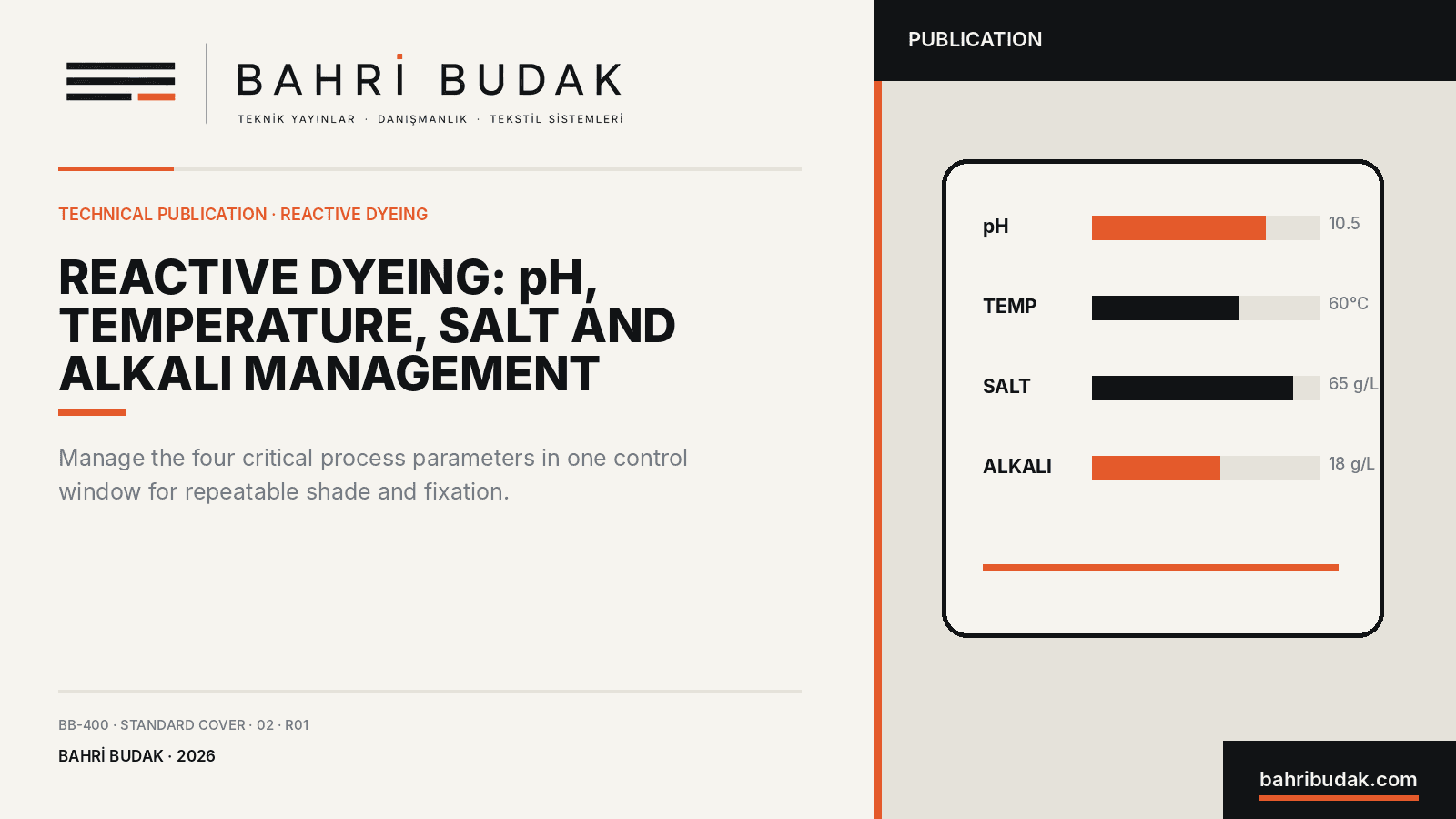
Pretreatment adequacy, water quality, liquor ratio, pH, conductivity, dosing, the time-temperature profile and fabric circulation must be assessed within one process record.

Colour and shade continuity on a dyed fabric surface

Process Objective

The objective is not to hit the target shade once, but to transfer shade, nuance and fastness repeatably from laboratory to bulk while protecting fibre and fabric integrity.

01 · Machinery and Equipment

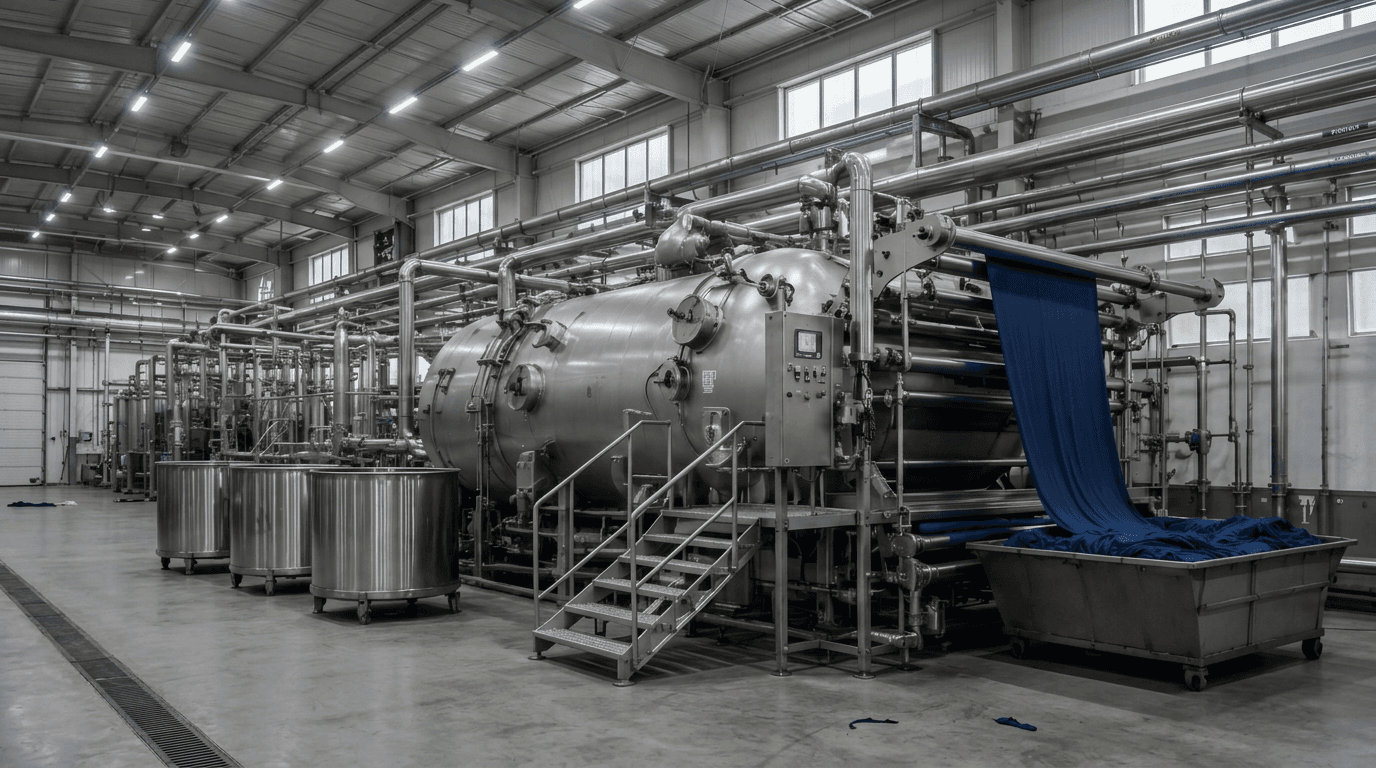
  • HT Jet / Soft-flow dyeing machine
  • Overflow and low-tension rope dyeing systems
  • Laboratory dyeing machine
  • Automatic dyestuff-chemical preparation and dosing system
  • Washing, neutralisation and reduction-clearing equipment
  • Water treatment and process-water control system
02 · Critical Process Parameters

  • Pretreatment adequacy: absorbency, whiteness, oil and alkali residues
  • Liquor ratio and machine loading
  • pH, conductivity, water hardness and metal ions
  • Time-temperature profile, heating-cooling rate and dwell time
  • Sequence and rate of salt, alkali, dye and auxiliary dosing
  • Fabric turnover, pump-nozzle balance and rope tension
  • Washing efficiency, neutralisation and final-bath criteria

03 · Measurement and Control Points

01

Laboratory-to-bulk recipe comparison

02

pH, conductivity and temperature trend records

03

Dosing time, quantity and preparation concentration

04

Fabric turnover time and nozzle-pump setting

05

Colour measurement, shade-nuance and within-batch uniformity

06

Wash, rubbing and end-use-relevant fastness controls

07

Reason codes for reprocessing, dye additions and corrections

04 · ROOT CAUSE

Common Defects, Root Cause and Corrective Action

01

Uneven Dyeing / Abraj

Symptom / Belirti

Light-dark areas, directional shade difference or local stains within a batch.

Root Cause / Kök Neden

Insufficient pretreatment, rapid dosing, unsuitable pH-temperature transition, poor circulation or overloading.

Corrective Action / Düzeltici Faaliyet

Check absorbency and residues; slow the dosing profile; verify loading, pump, nozzle and turnover time.

02

Batch-to-Batch Shade Variation

Symptom / Belirti

Deviation in shade, nuance or depth despite using the same recipe code.

Root Cause / Kök Neden

Variation in substrate lot, water, dye strength, recipe scaling, weighing-dosing or process profile.

Corrective Action / Düzeltici Faaliyet

Trace input lots and dye strength; lock recipe versions; verify weighing-dosing and compare process trends.

03

Crease or Rope Mark

Symptom / Belirti

Dark-light line, lustre difference or permanent deformation along a fold.

Root Cause / Kök Neden

High rope tension, low circulation, unsuitable nozzle, overloading or dwell at a critical temperature.

Corrective Action / Düzeltici Faaliyet

Optimise load and nozzle pressure; shorten turnover time; maintain movement through critical zones and verify crease-prevention measures.

04

Poor Fixation and Washing-off

Symptom / Belirti

Low fastness, shade bleeding, hydrolysed dye residue or high colour load in the final bath.

Root Cause / Kök Neden

Insufficient alkali-pH or fixation time; unsuitable temperature; inadequate rinsing, soaping or neutralisation.

Corrective Action / Düzeltici Faaliyet

Verify fixation profile and final pH; adjust washing steps to contamination load; define final-bath acceptance criteria.

05 · DOCUMENTATION

Downloadable Technical Resources

PDF

Reactive Dyeing of Cotton Knits — Training Note

Reactive dyeing sequence, critical controls and bulk-production approach.

Open Resource
PDF

Process Management in an HT Jet Dyehouse

Machine, recipe, turnover, dosing and process-record system.

Open Resource
XLSX

Dyeing Start-up Checklist

Pre-start verification of machine, fabric, recipe and chemicals.

Open Resource

Technical Reference Framework

This page does not prescribe fixed recipes or machine setpoints. Final values must be validated against fibre, yarn, construction, machinery, chemical system and customer specification.

Field Image Standard

Requested field photo: horizontal 16:9 view from a 30–45° angle showing an HT Jet body, nozzle-pump circuit and automatic dosing connection, without visible operator or company data.