01 · Machinery and Equipment
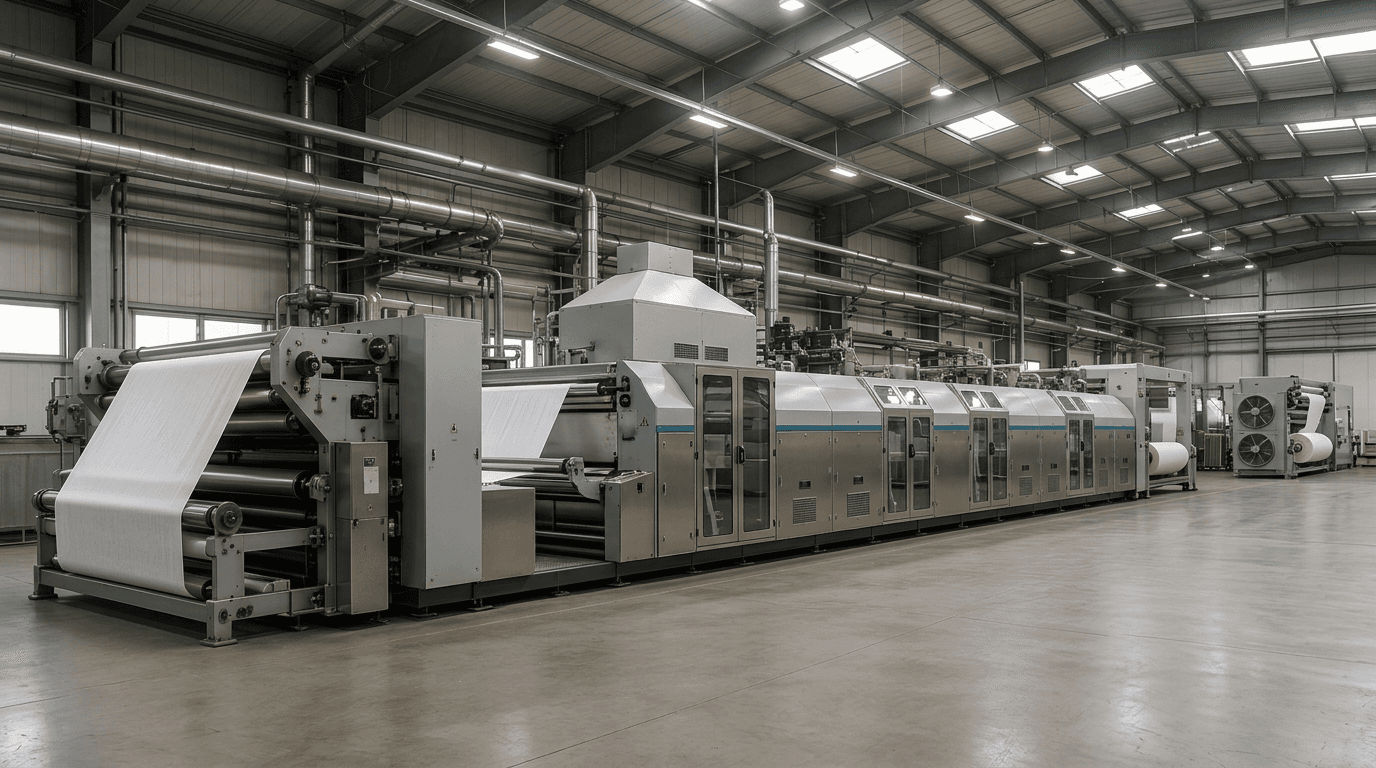
- Stenter and weft straightener
- Compactor or sanforizing system
- Relax dryer
- Padder and chemical application system
- Calender
- Raising, brushing and shearing machines
03 · FINAL PERFORMANCE
Stentering, compaction, relaxation, chemical application and mechanical surface treatments jointly determine final fabric performance.
Process Objective
The purpose of finishing is not merely drying or softening; it is to deliver target width-GSM, shrinkage, spirality, hand and any functional property against a verifiable final specification.
01 · Machinery and Equipment
02 · Critical Process Parameters
03 · Measurement and Control Points
01
Finished width and GSM
02
Dimensional change after washing and drying
03
Spirality, bow and skew
04
Fabric moisture and inside-to-outside roll uniformity
05
Hand assessment and instrumental verification where applicable
06
Shade change, yellowing and surface appearance
07
Functional-finish testing and customer specification
04 · ROOT CAUSE
Symptom
Length or width loss after washing exceeds specification.
Root Cause
Knitting and wet-process tensions, insufficient relaxation, incorrect overfeed or compaction.
Corrective Action
Reduce entry tension; increase relaxation; verify overfeed-compaction balance through wash testing.
Symptom
Width or GSM variation along the roll, affecting cutting yield.
Root Cause
Variation in entry moisture or feed, chain setting, overfeed, speed or winding tension.
Corrective Action
Record entry-exit trends; verify chain parallelism and feed sensors; apply roll-based measurement.
Symptom
Unwanted change in shade, whiteness or nuance after fixation.
Root Cause
Excessive temperature-dwell, alkali or chemical residue, incompatible softener or poor drying-fixation balance.
Corrective Action
Check residues and pH; verify thermal profile; run chemical compatibility trials and standardise entry moisture.
Symptom
Bow, diagonal distortion, edge curling or clip marks.
Root Cause
Unbalanced entry, weft-straightener setting, chain mismatch, edge opener or clip-pin problem.
Corrective Action
Correct centring and edge opening; calibrate chain and weft straightener; verify clip-pin maintenance.
05 · DOCUMENTATION
Stenter parameters, chemical application and final-quality approach.
Open Resource →Relationship between relaxation, compaction, shrinkage and spirality.
Open Resource →Width, GSM, overfeed, speed, temperature, chemical and final-control records.
Open Resource →06 · PUBLICATIONS
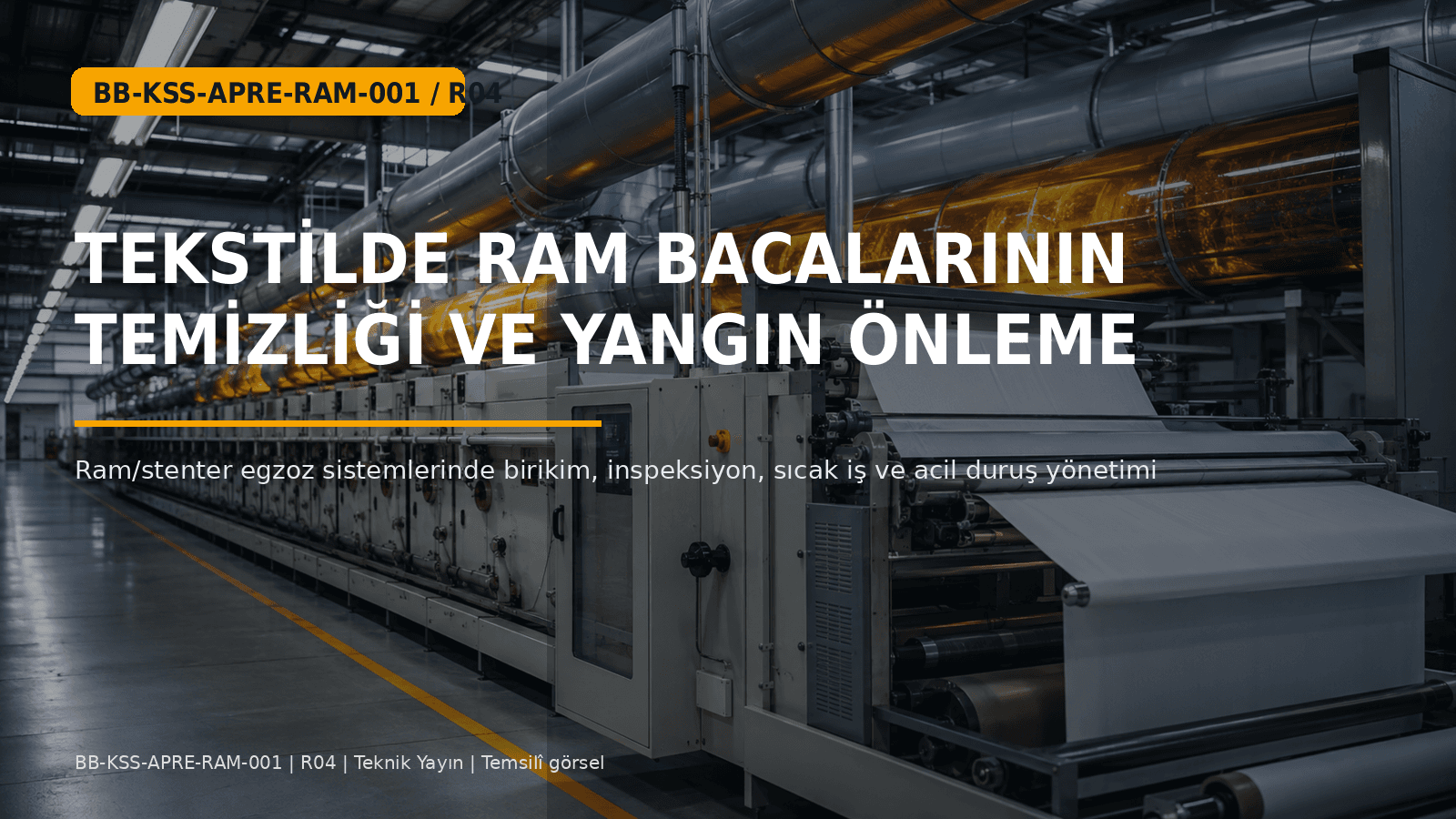
Explains how to control lint, oil, wax and aerosol deposits in stenter exhaust systems and manage inspection, cleaning, hot work and emergency response.
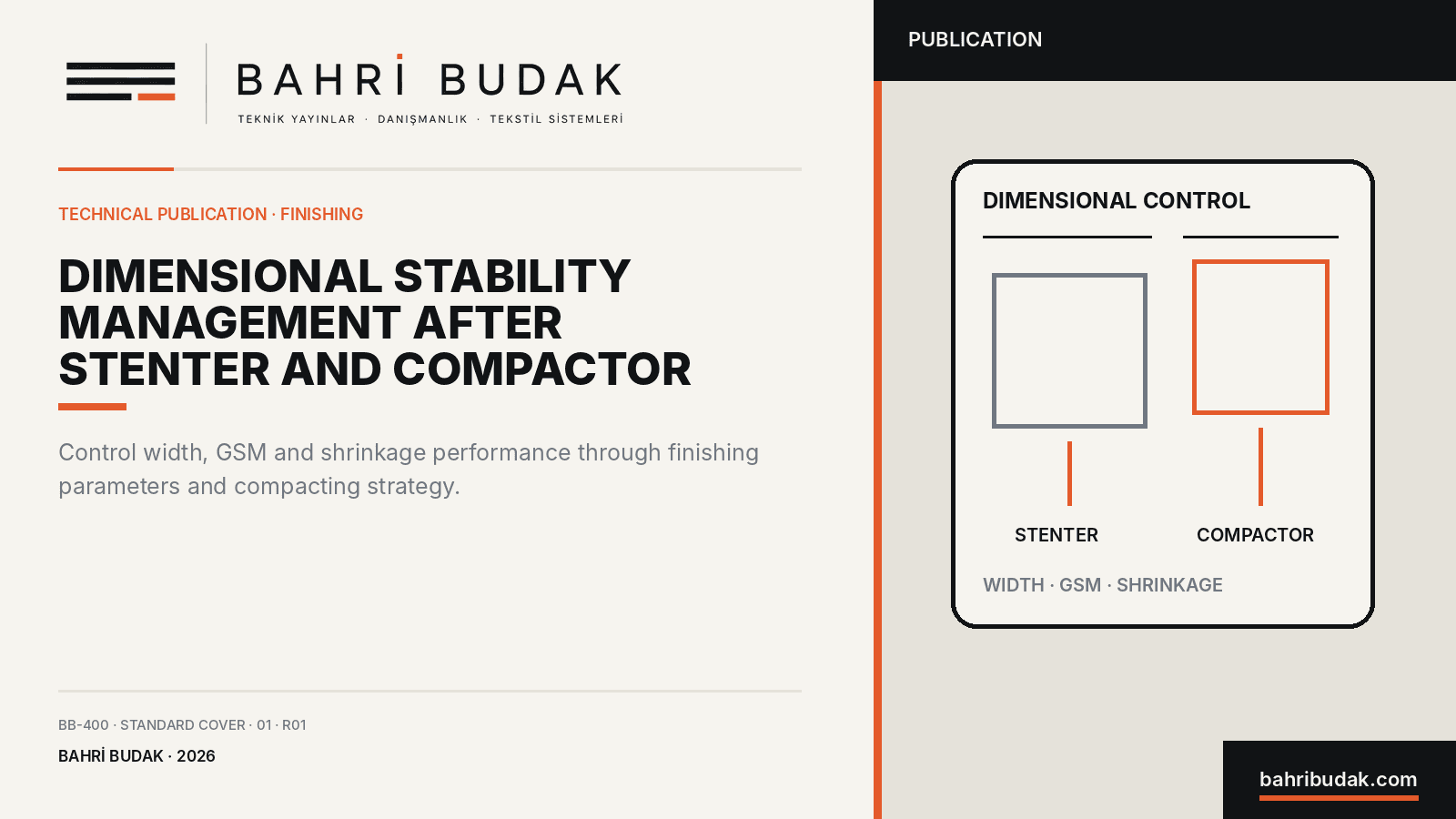
Explains the combined effects of stentering, relaxation and compacting on finished width, GSM, lengthwise and widthwise shrinkage, spirality and dimensional change after laundering.
Technical Reference Framework
This page does not prescribe fixed recipes or machine setpoints. Final values must be validated against fibre, yarn, construction, machinery, chemical system and customer specification.
Field Image Standard
Requested field photo: horizontal 16:9 view from a 30–45° angle showing the stenter entry padder, weft straightener and chain/clip section with a clear fabric-flow direction.
Other expertise areas